
How to Keep Your Dog Happy and Active When You Have a Busy Schedule
Dogs thrive on routine, attention and having things to do. But between work, school runs, appointments and everything else that fills the week, even the most devoted dog owners can have days when there simply aren’t enough hours to give their dog as much activity as they would like.
The good news is that keeping a dog happy doesn’t necessarily mean spending several hours walking every day. Physical exercise is important, but dogs also benefit from mental stimulation, opportunities to explore, social interaction and, just as importantly, enough time to rest.
Finding the right balance can make busy days much easier for both you and your dog.
Make Walks More Interesting, Not Just Longer
When time is limited, it can be tempting to think that the solution is simply to walk faster or cover as much distance as possible. But from your dog’s perspective, a walk isn’t only about exercise.
Dogs experience much of the world through their sense of smell. Stopping to investigate a tree, patch of grass or interesting scent may not look particularly productive to us, but it gives a dog plenty of information to process.
Rather than rushing through every walk, give your dog opportunities to sniff and explore. You can also vary your route from time to time. A different street, park or walking route introduces new smells and surroundings without necessarily requiring a longer outing.
Add Mental Stimulation at Home
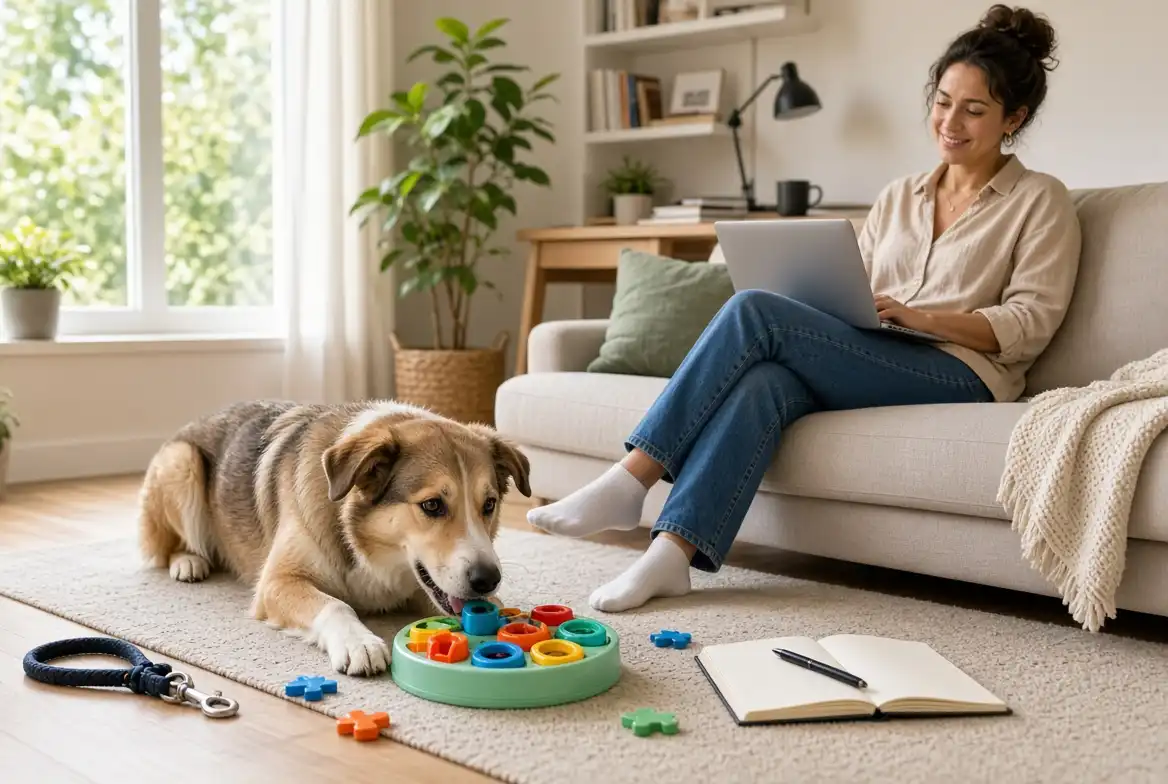
Physical exercise is only one part of keeping a dog occupied. Mental activities can be surprisingly tiring too, which makes them particularly useful on busy days or when bad weather limits time outside.
Food puzzles, treat-dispensing toys and simple scent games can all encourage dogs to think and problem-solve. You don’t necessarily need specialist equipment either. Hiding a few treats around a room and asking your dog to find them can turn an ordinary afternoon into a short scent activity.
Training can work in much the same way. Spending ten minutes practising familiar commands or introducing a new skill gives your dog focused interaction with you while also exercising their brain.
The important thing is variety. Doing exactly the same activity every day can eventually become predictable, so rotating toys, games and training exercises can help maintain interest.
Think About What Happens While You’re at Work
For many families, the biggest challenge isn’t the morning or evening. It’s the long stretch in between.
Some dogs are perfectly comfortable spending several hours relaxing at home, particularly once they are accustomed to the routine. Others need more activity, company or opportunities to go outside during the day. Age, temperament, health and previous experience can all make a difference.
If your dog regularly has long periods at home while everyone is working or at school, consider what would make that time more comfortable.
For some families, that might mean arranging a dog walker. For others, using a reputable doggy day care on certain days can provide a combination of activity, supervision and opportunities to interact with other dogs.
Neither option needs to be an everyday arrangement. Even adding extra activity on particularly busy days can help create a routine that works better for the whole household.
Remember That Every Dog Is Different
It’s easy to compare your routine with other dog owners, but dogs have very different needs.
A young, energetic dog may need considerably more stimulation than an older dog that is perfectly content with a gentle walk and a quiet afternoon. Breed can influence activity levels too, although personality and health are just as important.
Pay attention to your own dog’s behaviour. Restlessness, destructive behaviour or constantly trying to initiate activity may indicate that they need more stimulation. Equally, a dog that is tired, reluctant to exercise or looking for somewhere quiet may need more rest rather than another activity.
The aim isn’t to keep your dog entertained every minute of the day. Dogs need downtime too.
Use Small Pockets of Time
A busy schedule often leaves small gaps that don’t feel long enough for a proper dog activity. Those few minutes can still be useful.
You might practise a couple of training commands before breakfast, play a short game in the garden while dinner is cooking or spend five minutes on a scent game before an evening walk.
These short interactions add up, and they also give your dog regular moments of attention throughout the day.
Getting other members of the household involved can help too. Older children, where appropriate and supervised, might help with simple training exercises, prepare puzzle toys or play games with the family dog.
Keep a Routine Where You Can
Dogs often cope well with busy households when they have some idea of what to expect.
Meals, walks and rest don’t need to happen at precisely the same minute every day, but a reasonably consistent pattern can help your dog settle into the family’s routine.
If weekdays are particularly busy, think about which parts of the day you can keep predictable. Perhaps mornings always include a walk, while evenings include some play or training. If you know one day of the week is especially hectic, you can plan additional help or activity in advance.
This can be much easier than trying to compensate after your dog has already spent a long day without enough stimulation.
Quality Matters as Much as Quantity
Most dog owners occasionally feel guilty that they aren’t doing enough, particularly during busy weeks. But keeping a dog happy isn’t a competition to see who can provide the longest walks or the fullest schedule.
What matters is meeting your dog’s individual needs.
A varied walk where your dog can explore, a short training session, some social interaction and time spent relaxing with the family can all contribute to a satisfying day.
Watch how your dog responds to their routine and adjust it when necessary. With a little planning, even a busy household can provide plenty of exercise, stimulation, companionship and rest — without every day having to revolve entirely around the dog.