
How to Build a Helpful Online Presence for a Pet-Care Business
Pet owners often turn to the internet before choosing a groomer, trainer, boarding facility, pet sitter, or local rescue. They want clear answers, trustworthy advice, and an easy way to get in touch. A useful online presence can help a pet-care business meet those needs, but it works best when it is built around the animals and people it serves—not simply around promotion.
Start with the questions pet owners ask
Before planning a website or posting on social media, list the questions you hear most often. A dog trainer might be asked how to prepare a puppy for its first class. A boarding provider may regularly explain vaccination requirements, drop-off routines, and what to pack. A cat sitter might need to reassure owners about updates and emergency plans.
These questions can become the foundation for practical articles, service pages, and frequently asked questions. Give each page one clear purpose, use plain language, and explain what a reader should do next. For health concerns, be careful not to diagnose or replace veterinary care. Explain when an owner should contact their veterinarian, and have medical information reviewed by a qualified professional.
Make the website easy to use
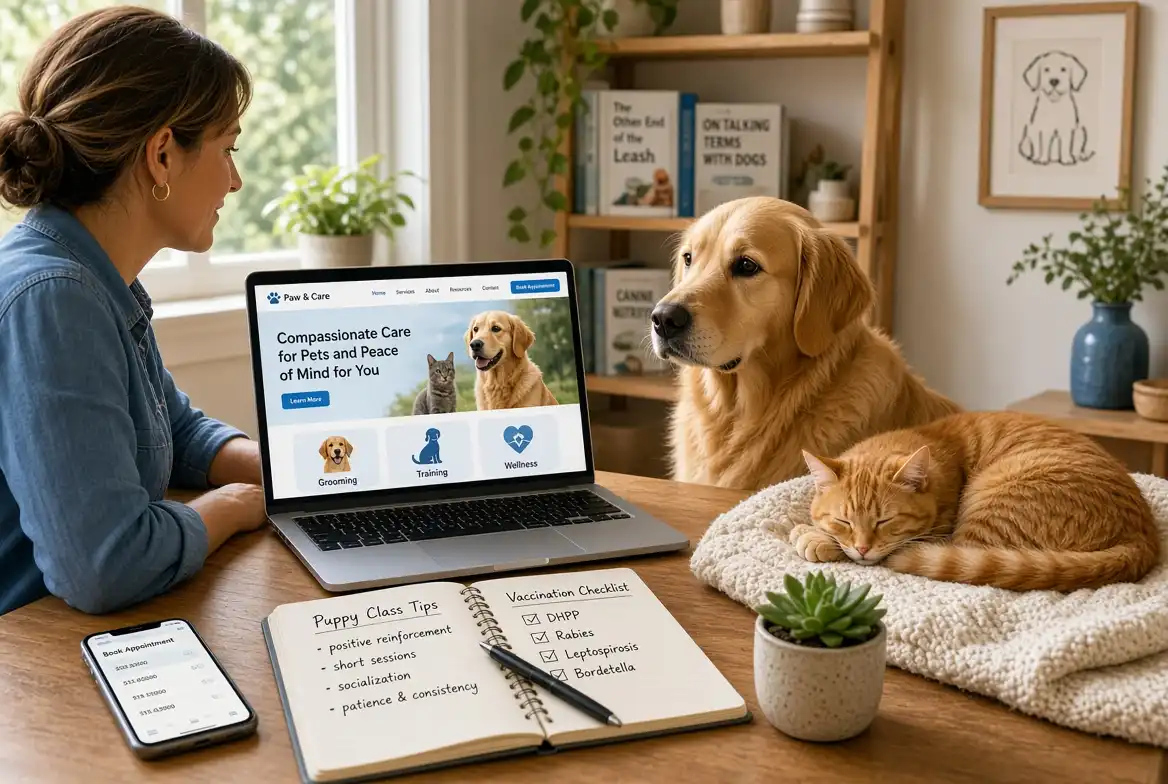
A pet owner may be looking for help while standing outside a clinic or managing a busy household. The most important information should be quick to find on a phone: the services you offer, the areas you serve, opening hours, contact details, and how to book or ask a question.
Use straightforward navigation and descriptive headings. Service pages should explain who each service is for, what it includes, how appointments work, and any relevant limitations. Recent, genuine photos can help visitors understand your setting, but make sure you have permission to share images of clients and their pets. Add text descriptions to images so visitors using assistive technology can understand what they show.
Think about trust as well as appearance. Provide accurate prices or explain how estimates are made. State your cancellation policy, describe how animals are handled, and make it simple to find your business’s location or service area. Keep forms short and ask only for information you need. Pet owners may share sensitive details about their animals, so explain how enquiries and personal data are handled.
Share useful content consistently
You do not need to publish every day to be helpful. A modest schedule of useful, accurate updates is more sustainable than a burst of posts followed by months of silence. Consider a seasonal checklist, a guide to preparing for a first grooming appointment, or advice on making a pet-friendly home safer. Keep the guidance specific to your experience, and distinguish general information from recommendations that require individual professional advice.
Before publishing, check dates, names, and any care instructions. Advice that applies to one animal may not suit another because age, breed, health, and temperament all matter. When appropriate, direct readers to their veterinarian or another qualified professional for individual guidance.
Pet bloggers and animal businesses can also reach readers beyond their own websites by contributing genuinely useful articles to relevant publications. Look for outlets whose audience and standards fit your subject; a directory of pet guest-posting websites can help you identify possible places to research. Read each site carefully before pitching, follow its submission rules, and offer an original article that serves its readers. A useful contribution should stand on its own rather than simply promoting a service.
Decide when to get help with the technical work
Some businesses can begin with a simple website platform, while others need features such as online booking, staff profiles, appointment reminders, or a secure client portal. Be clear about what you need now and what can wait. A complicated site is not automatically a better site; extra features bring maintenance, cost, and possible points of failure.
If the work is beyond your skills, outline the project before you look for technical help. Write down the pages and features required, who will provide text and images, your budget, and how you will judge whether the finished work is successful. When you are ready to hire a web developer for your business, a clear scope makes it easier to compare proposals and avoid misunderstandings. Osdire’s hiring guide is one resource for thinking through scope, pricing, and delivery expectations.
Ask potential developers about comparable projects, mobile usability, accessibility, security, and what happens after launch. Confirm who owns the site files and accounts, who can update content, and whether ongoing maintenance is included. Agree on milestones and review the work as it progresses, rather than waiting until the final handover to check that it meets your needs.
Keep improving after launch
A website is not finished simply because it is online. Check that contact forms work, opening hours are current, and links and booking steps still function. Ask a few clients to try finding key information on their phones and note where they get stuck. If visitors repeatedly ask a question already covered on your site, make that answer easier to find.
A strong online presence grows from the same qualities that matter in good pet care: reliability, clear communication, and attention to individual needs. By sharing accurate advice, making practical information accessible, and keeping your digital tools manageable, you can help pet owners feel more informed before they ever walk through your door.