

How to Scratch-Proof Your Home Without Punishing Your Cat
You’ve caught your cat mid-shred on the corner of your couch — again. The fabric is fraying, you’re frustrated, and your cat looks completely unbothered. Most owners assume this is a discipline problem. It isn’t. Scratching is one of the most hardwired behaviors a cat has, and no amount of squirting water or saying “no” will make the urge go away. What you can do is redirect it so effectively that your furniture becomes the least interesting option in the room.
Cat scratching solutions work best when you understand what’s actually driving the behavior. Cats scratch to shed the outer sheath of their claws, to stretch the full length of their spine and shoulders, and to leave both visual marks and scent signals from glands in their paws. It’s communication, exercise, and grooming rolled into one. The goal isn’t to eliminate scratching — it’s to give your cat a better target.
The good news — well, the practical reality — is that most scratching problems are solved not with punishment but with smart placement, the right materials, and a little patience. Here’s how to do it properly.
Why Your Cat Ignores the Scratching Post You Already Bought
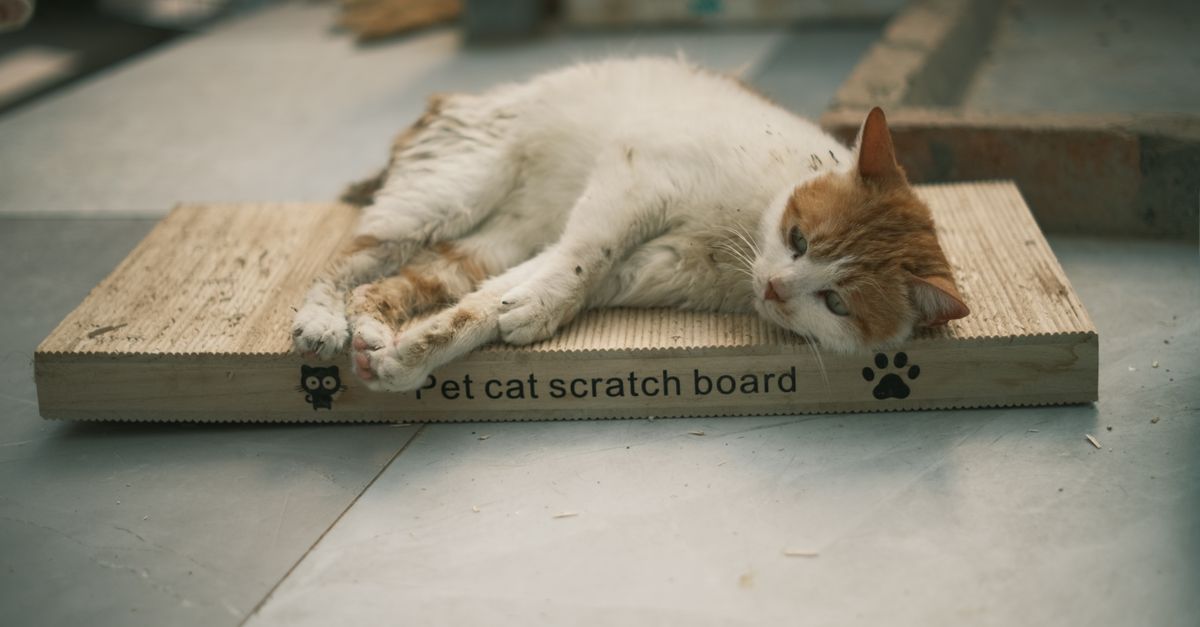
Most owners buy one post, put it in a corner of the spare bedroom, and wonder why the cat still prefers the sofa. Location is almost always the culprit. Cats scratch where they spend time, especially near sleeping spots and in high-traffic areas where their scent marks will be noticed. A post tucked out of the way is a post that gets ignored.
Post Height and Stability
Height matters more than most people realize. A cat needs to fully extend its body when scratching — that’s the whole point of the stretch. Most cheap posts top out at 16 inches, which isn’t tall enough for an adult cat. Look for posts at least 28 to 32 inches tall. Stability is equally critical: if the post wobbles when your cat leans into it, they’ll abandon it after one try. A heavy base or a post that can be wall-mounted solves this immediately.
Sisal vs. Carpet vs. Cardboard
Texture drives preference. Sisal rope is the closest match to tree bark — the surface cats evolved to use — and most cats prefer it over carpet. Carpet-covered posts can actually backfire because they teach your cat that carpet texture is acceptable to scratch, which doesn’t help when you have carpet floors. Horizontal cardboard scratchers are a genuinely useful addition: some cats strongly prefer scratching flat surfaces, and a $10 cardboard pad placed near the sofa can pull attention away from the armrest overnight.
Pro tip: Rub a small amount of dried catnip into a new sisal post on day one. Don’t spray liquid attractant — it soaks into the fibers and the scent fades within hours. Dried catnip pressed into the rope stays potent for days and gives your cat a reason to investigate immediately.
How to Protect Furniture While You’re Retraining
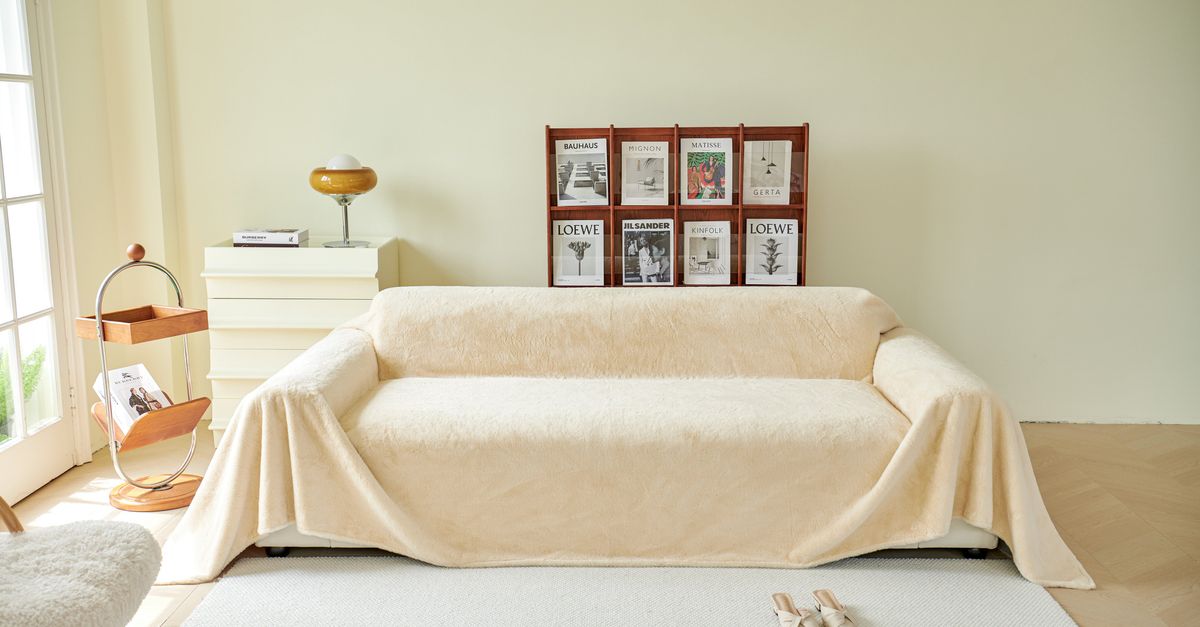
Retraining takes time — usually two to four weeks of consistent redirection. During that window, you need physical barriers on the spots your cat currently targets, or you’ll be fighting a losing battle. Double-sided tape is the most effective short-term deterrent because cats hate the sticky sensation on their paws. Brands like Sticky Paws make sheets specifically sized for sofa arms and corners. They’re transparent, reusable, and genuinely unpleasant enough to work.
Furniture Sprays and Their Limits
Citrus-based sprays can deter scratching on specific spots, but they need reapplication every 24 to 48 hours and lose effectiveness quickly. They work best as a supplement to tape, not a replacement. Avoid sprays with essential oils like tea tree or eucalyptus — these are toxic to cats at concentrated levels, and a cat grooming its paws after contact can ingest enough to cause harm.
Vinyl Nail Caps
Soft nail caps — brand names like Soft Paws — are small vinyl covers that glue over each claw and last roughly four to six weeks. They don’t prevent the scratching motion, but they eliminate the damage entirely. They’re worth considering for cats who are slow to redirect, elderly cats whose habits are deeply set, or households with antique or irreplaceable furniture. Application takes about 10 minutes once you and your cat are used to the process, and most cats tolerate them well within a day. If you haven’t already built a solid nail trimming routine, start there first — caps go on much more smoothly over neatly trimmed claws.
Placing New Scratching Surfaces Strategically
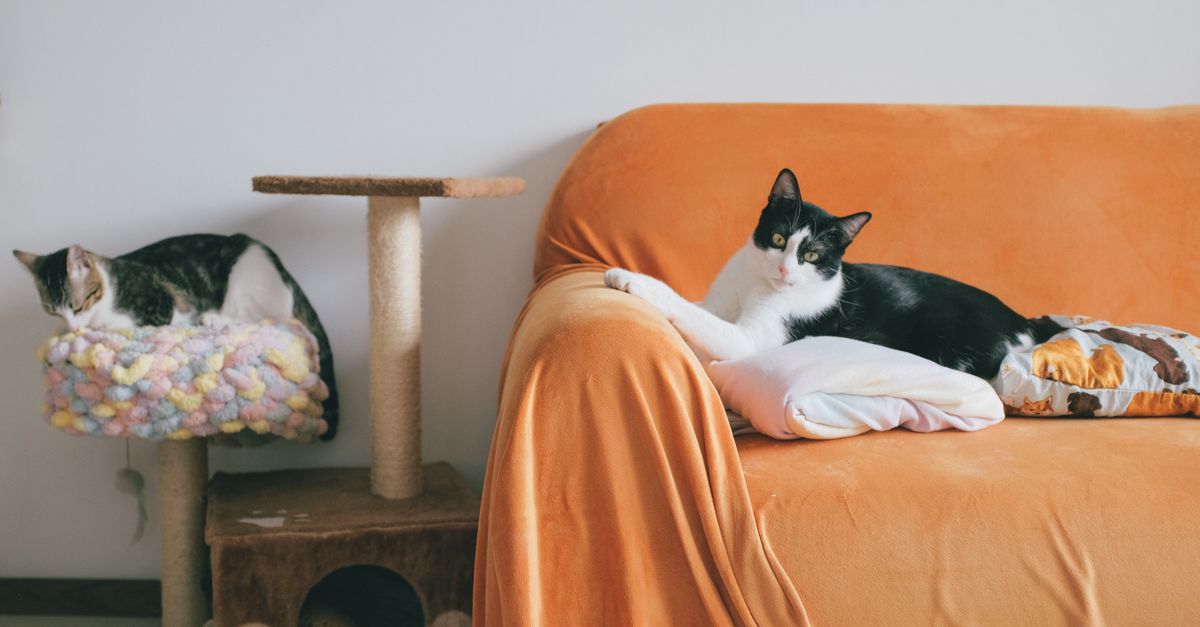
One post in one room isn’t enough for most cats. A practical rule: one scratching surface per main living area, plus one near each of your cat’s favorite napping spots. Cats often scratch immediately after waking up — it’s a full-body stretch reflex — so a post placed within a few feet of where your cat sleeps will get used without any training at all.
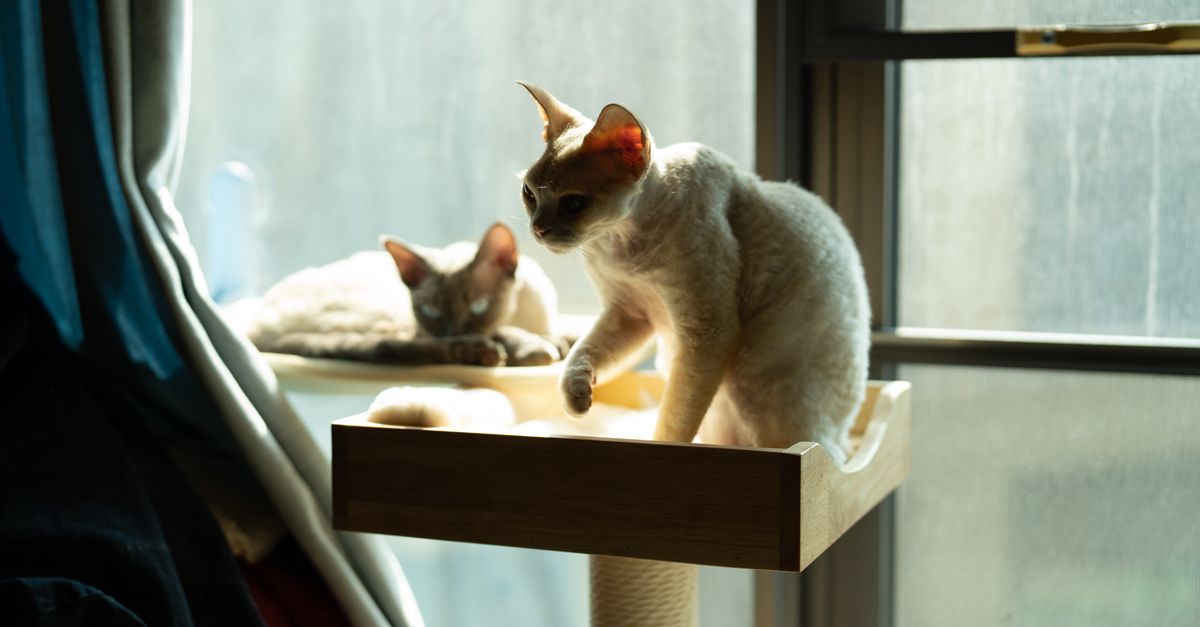
Cat trees with integrated sisal posts serve double duty. They provide vertical territory, which reduces stress and attention-seeking behavior (you can read more about how boredom drives destructive habits in cats and dogs), and they give your cat a legitimate scratching station at the same time. Position a tall cat tree near a window if possible — the outdoor view keeps cats engaged and makes the tree a destination rather than an afterthought.
Redirecting in the Moment Without Creating Fear
What Not to Do
Shouting, clapping loudly, or physically moving your cat away from the furniture creates anxiety without teaching an alternative. Your cat doesn’t connect the punishment to the act of scratching — they connect it to your presence. The result is a cat who scratches when you’re not in the room, which is worse. Understanding your cat’s body language helps you catch the pre-scratch stretch early, which is when redirection is actually effective.
The Two-Second Redirect
When you see your cat approaching a furniture target, calmly pick them up or use a toy to lure them to the nearest approved post. The moment they make contact with the post — even briefly — offer a small treat. You’re not rewarding the original approach to the sofa; you’re marking and rewarding the contact with the post. Repeat this consistently for two to three weeks and the post becomes the default. Most cats shift their preference within 10 to 14 days when the post is well-placed and the furniture is simultaneously made less appealing.
Warning: Never use a spray bottle during redirection. Intermittent punishment creates a cat who is anxious around you specifically, and anxiety is one of the main triggers for increased scratching and other stress behaviors. If your cat is showing broader signs of stress, the strategies in our guide on reducing pet stress apply at home too, not just at the vet.
Long-Term Habits That Keep Scratching Under Control
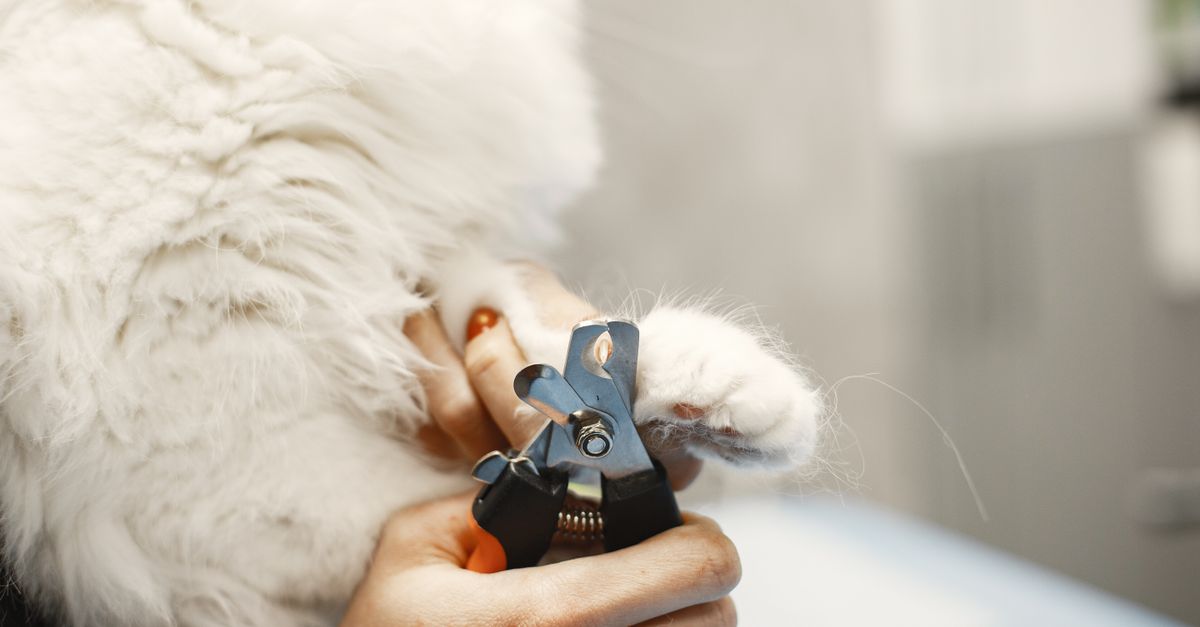
Once your cat is reliably using their post, maintenance is straightforward. Trim your cat’s claws every three to four weeks — shorter claws do less damage during any accidental furniture contact and make nail caps easier to apply if you use them. Replace sisal posts when the rope becomes smooth and compressed; a worn-out post loses its appeal because the texture that cats love has been flattened away. Most sisal posts need replacing or re-roping every 12 to 18 months depending on use.
Keep the scratching surfaces your cat loves clean. Cats are sensitive to scent, and a post that smells like cleaning products or another pet may be avoided. Vacuum sisal posts lightly to remove shed claw sheaths and loose fibers, but skip the disinfectant sprays. The cat’s own scent on the post is part of what makes it attractive — washing it away resets the association. Pair consistent scratching habits with a stable daily routine; cats who feel secure scratch appropriately, while cats dealing with disrupted schedules or diet changes often act out. If you’ve recently switched your cat’s food or changed their environment, give them a few extra days of patience before assuming a behavior problem is permanent.
Frequently Asked Questions
My cat only scratches one specific spot on the wall — not furniture. Is that still a problem?
Wall scratching usually means your cat is targeting the texture or the height, not the location itself. Check what’s behind the wall at that spot — sometimes cats are drawn to sounds inside walls, like pipes or rodents. If there’s nothing structural going on, place a sisal panel or a vertical cardboard scratcher directly over the spot for two weeks, then gradually shift it a foot at a time toward a more acceptable location.
I have two cats and they only scratch furniture when the other cat is nearby. What’s happening?
Scratching in front of another cat is often a territorial signal, not a grooming behavior. The paw glands leave scent markers, and your cats may be competing over space. The fix is to add more scratching posts — at least one per cat, in separate areas — and ensure each cat has vertical territory that’s genuinely their own. A second cat tree in a different room often resolves this within a week.
My older cat scratched appropriately for years and has suddenly started targeting furniture again. Should I be concerned?
A sudden change in a previously reliable behavior in a senior cat warrants a vet check. Arthritis can make a tall vertical post painful to use, causing the cat to switch to lower horizontal surfaces like sofa bases. Cognitive changes in cats over 12 can also disrupt established habits. Your vet can assess joint health and recommend a post height or angle that works for your cat’s current mobility — this is often a simple fix once the underlying cause is identified.