
The Hidden Environmental Cost of Cat Litter, and What Eco-Conscious Pet Owners Are Switching To
Anyone who has ever loved a cat knows the strange devotion that comes with it. You learn their 3 a.m. zoomies, the exact spot behind the ear they can’t resist, the way they somehow know which lap is softest. Cat people will do a lot for their cats. What most of us don’t think much about is what happens after the litter box gets scooped.
That used litter has to go somewhere, and for most cat owners, that somewhere is a landfill it will never leave.
A Bigger Problem Than It Looks
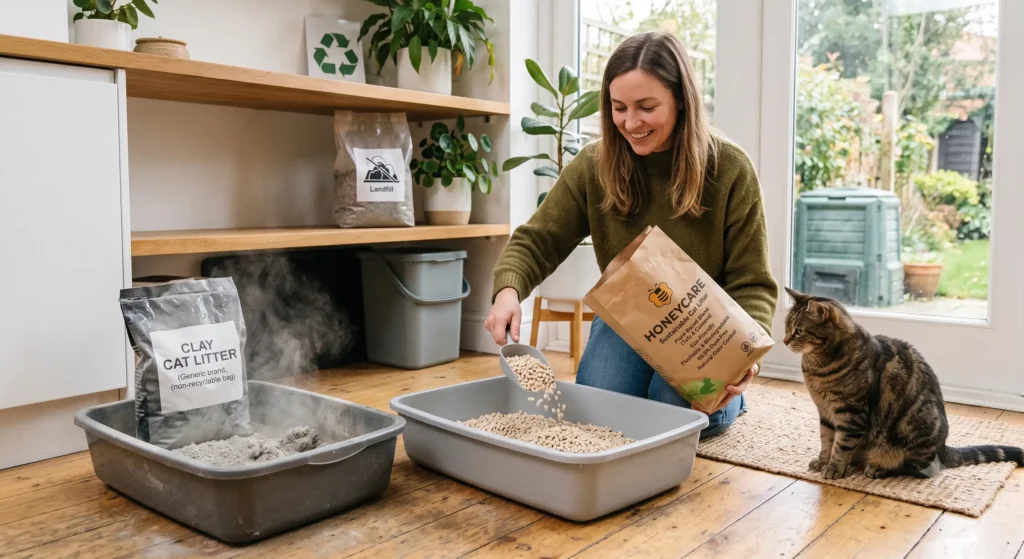
Clay litter has dominated pet store shelves for decades, and it’s not hard to see why cat owners default to it. It’s cheap, it’s everywhere, and it works. But there’s a cost hiding behind the convenience. Industry estimates suggest more than 2 million tons of used clay litter get thrown into U.S. landfills every year. Clay is strip-mined out of the ground, and once it’s used, it doesn’t break down. It just sits there.
For people who already think twice about what goes in the recycling bin or where their coffee grounds end up, that’s not a small detail to learn about their cat’s litter box.
Sustainability Is Finding Its Way Into the Litter Aisle
Eco-conscious choices have already changed the way a lot of us shop for food, cleaning supplies, and household basics. Pet care has been slower to catch up, but that’s changing fast. Cat owners are starting to ask the same questions about litter that they already ask about everything else in the cart: what’s it made of, and where does it end up?
There’s also a more personal reason plant-based litters are catching on. A lot of cat owners simply don’t want a box full of artificial fragrance and chemical additives sitting in the same room where their cat naps half the day.
Plant-Based Litter Isn’t the Trade-Off People Expect
There’s a common assumption that going eco-friendly means giving something up, whether that’s clumping power, odor control, or how easy cleanup is. Litters made from renewable ingredients like tofu and cassava are quietly proving that wrong. Instead of mined clay, they use natural, biodegradable materials built to hold up the same way cat owners are used to.
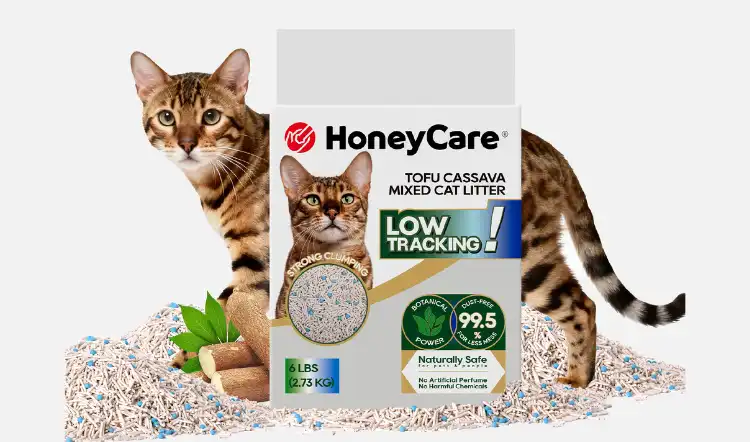
HoneyCare’s cat litter is a good example of where the category is headed. It’s made from plant-based ingredients, tofu and cassava among them, and it’s designed to be flushed in small amounts, which beats hauling a heavy bag of clay out to the trash every week. It clumps well, keeps odor in check, and comes in at 99.5% dust-free, so there’s a lot less of that gray dust tracked across the kitchen floor. No artificial perfumes, no harsh chemicals. Just something that works, without the parts that made a lot of cat owners uneasy about clay litter in the first place.
What to Look For
If you’re thinking about switching, a few things are worth checking before you commit:
- What it’s made of. Plant-based ingredients instead of mined clay is the whole point.
- Does it clump and control odor well? Sustainable only matters if it still does the job every day.
- How much dust does it kick up? Less dust means a cleaner floor and easier breathing, for you and your cat.
- How do you get rid of it? Some plant-based litters, HoneyCare’s included, can be flushed in small amounts, which makes cleanup a little less of a chore.
- What’s not in it. Fewer artificial fragrances and chemicals is almost always the better sign.
Small Box, Bigger Picture
Cats don’t care what’s in their litter box, as long as it feels right under their paws. But the people scooping it every day are starting to care quite a bit about where it all ends up. Eco-friendly litter has moved well past niche status, and it’s part of a bigger shift toward pet ownership that doesn’t force a choice between doing right by your cat and doing right by everything else.