
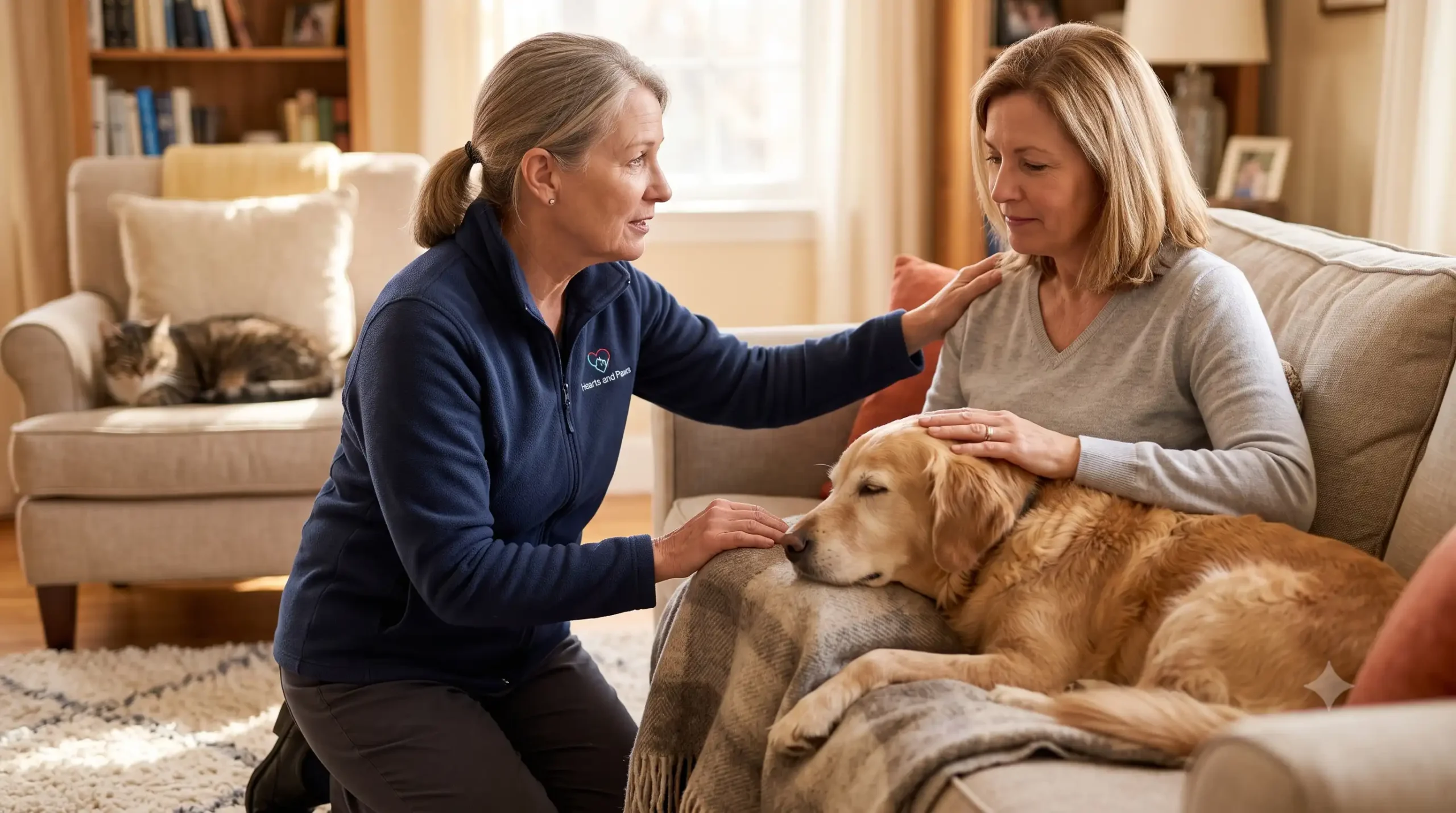
Mobile Dog and Cat Euthanasia Services: Compassionate End-of-Life Care in the Comfort of Home
Saying goodbye to a beloved dog or cat is one of the most difficult experiences a pet owner will ever face. While no one wants to think about that day, having compassionate support can make the process more peaceful for both your pet and your family. Mobile dog and cat euthanasia services provide veterinary end-of-life care in the comfort and familiarity of your own home, allowing pets to spend their final moments surrounded by the people who love them most.
What Is Mobile Pet Euthanasia?
Mobile pet euthanasia is a veterinary service in which a licensed veterinarian travels to your home to perform humane euthanasia for dogs or cats whose quality of life has significantly declined due to illness, injury, or old age.
Rather than transporting a sick or anxious pet to a veterinary clinic, families can remain in a familiar environment where pets often feel more relaxed. Home visits can reduce stress for pets who dislike car rides, become anxious in veterinary offices, or have difficulty walking due to age or medical conditions.
Benefits of At-Home Euthanasia
Many families choose mobile euthanasia because it offers a more personal and peaceful experience.
Some of the benefits include:
- Reduced stress for your pet
- A familiar, comfortable environment
- More privacy for your family
- Time to say goodbye without feeling rushed
- The ability for other family members and pets to be present if desired
Every family grieves differently, and an in-home visit allows you to honor your pet in a way that feels right for your situation.
Knowing When It’s Time
One of the hardest decisions pet owners face is determining when their pet’s quality of life has declined enough that euthanasia becomes the kindest option.
Signs may include:
- Chronic pain that cannot be adequately controlled
- Difficulty standing or walking
- Loss of appetite over an extended period
- Trouble breathing
- Frequent accidents or inability to control bodily functions
- Loss of interest in favorite activities
- More bad days than good days
Your veterinarian can help evaluate your pet’s overall quality of life and discuss whether hospice care, additional treatment, or euthanasia is the most compassionate choice.
What Happens During the Appointment?
Every veterinarian has a slightly different approach, but most appointments are designed to be calm and unhurried.
Typically, the veterinarian will first spend time discussing your pet’s condition and answering any remaining questions. Families are encouraged to spend as much time as they need saying goodbye before the procedure begins.
A sedative is often administered first to help the pet relax and become comfortable. Once the pet is peacefully asleep, the veterinarian administers the euthanasia medication, allowing your pet to pass gently and without pain.
Many veterinarians also offer guidance regarding cremation or burial arrangements afterward.
A Trusted Standard for Humane Care
The American Veterinary Medical Association (AVMA) recommends that euthanasia be performed in a manner that minimizes pain, fear, and distress whenever possible. The organization also notes that, for individually owned companion animals, euthanasia is often best performed in a quiet and familiar environment such as the pet’s home when practical.
Supporting the Whole Family
The loss of a pet affects every member of the household, including children and even other pets. Some families choose to allow children to participate in saying goodbye, while others prefer a private farewell.
There is no universally right approach. Your veterinarian can help answer questions and explain what to expect so everyone feels as prepared as possible.
Many mobile veterinarians also provide information about grief resources and pet loss support groups.
Choosing a Mobile Pet Euthanasia Provider
When selecting a mobile veterinarian, consider asking:
- Is the veterinarian licensed in your state?
- How much time is scheduled for the appointment?
- Is sedation included?
- What aftercare options are available?
- Can family members be present?
- Are weekend or emergency appointments offered?
Choosing an experienced, compassionate veterinarian can provide comfort during an incredibly emotional time.
Final Thoughts
Although saying goodbye is never easy, mobile dog and cat euthanasia services allow pets to spend their final moments where they feel safest—at home with the people they love. For many families, this peaceful setting offers comfort, privacy, and the opportunity to honor a lifelong companion with dignity and compassion.
Frequently Asked Questions
Is mobile pet euthanasia painful?
No. Veterinarians use medications designed to provide a peaceful, painless passing. Many pets first receive a sedative to help them relax.
Can my family be present?
Yes. Most mobile veterinarians encourage family members to remain with their pet throughout the process if they wish.
Can other pets be present?
Often, yes. Some veterinarians recommend allowing other household pets to observe afterward, as it may help them understand the loss.
How long does the appointment usually take?
Appointments commonly last between 30 and 90 minutes, depending on the family’s needs and the veterinarian’s process.
What happens after my pet passes?
Many mobile veterinarians coordinate private or communal cremation services or discuss home burial options where legally permitted.
Is at-home euthanasia more expensive than visiting a clinic?
Because the veterinarian travels to your home and dedicates additional time to the appointment, mobile services are generally more expensive than in-clinic euthanasia.
This FAQ was provided by Hearts and Paws.